
Last updated November 16, 2026
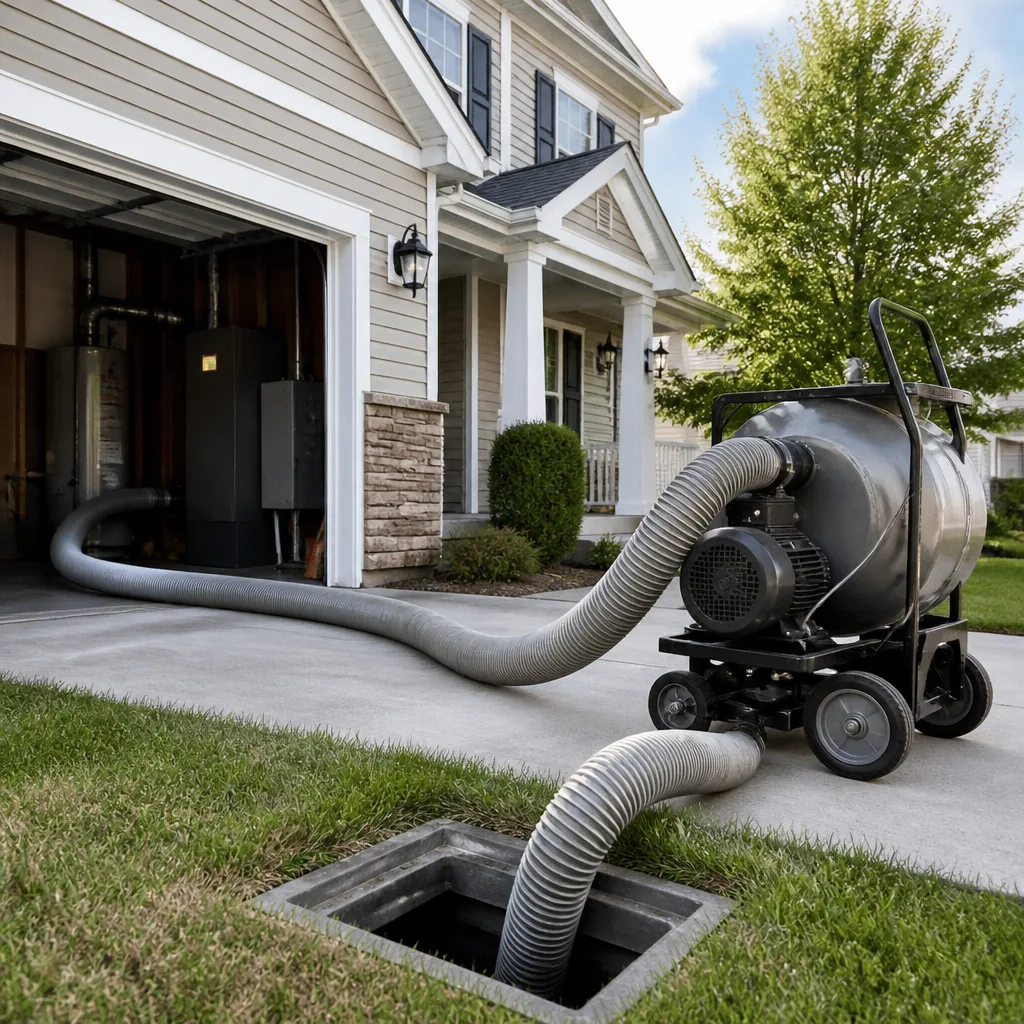 Whole-home duct cleaning
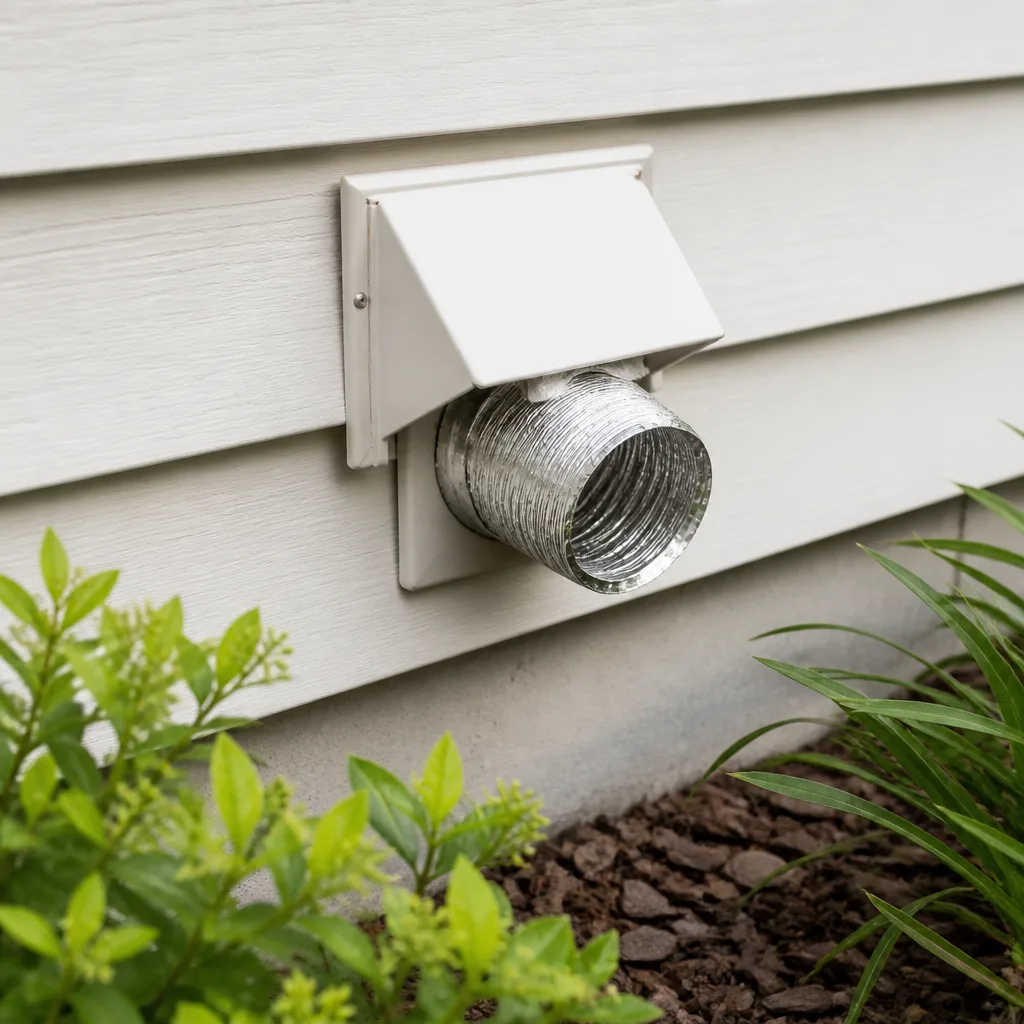 Dryer vent cleaning
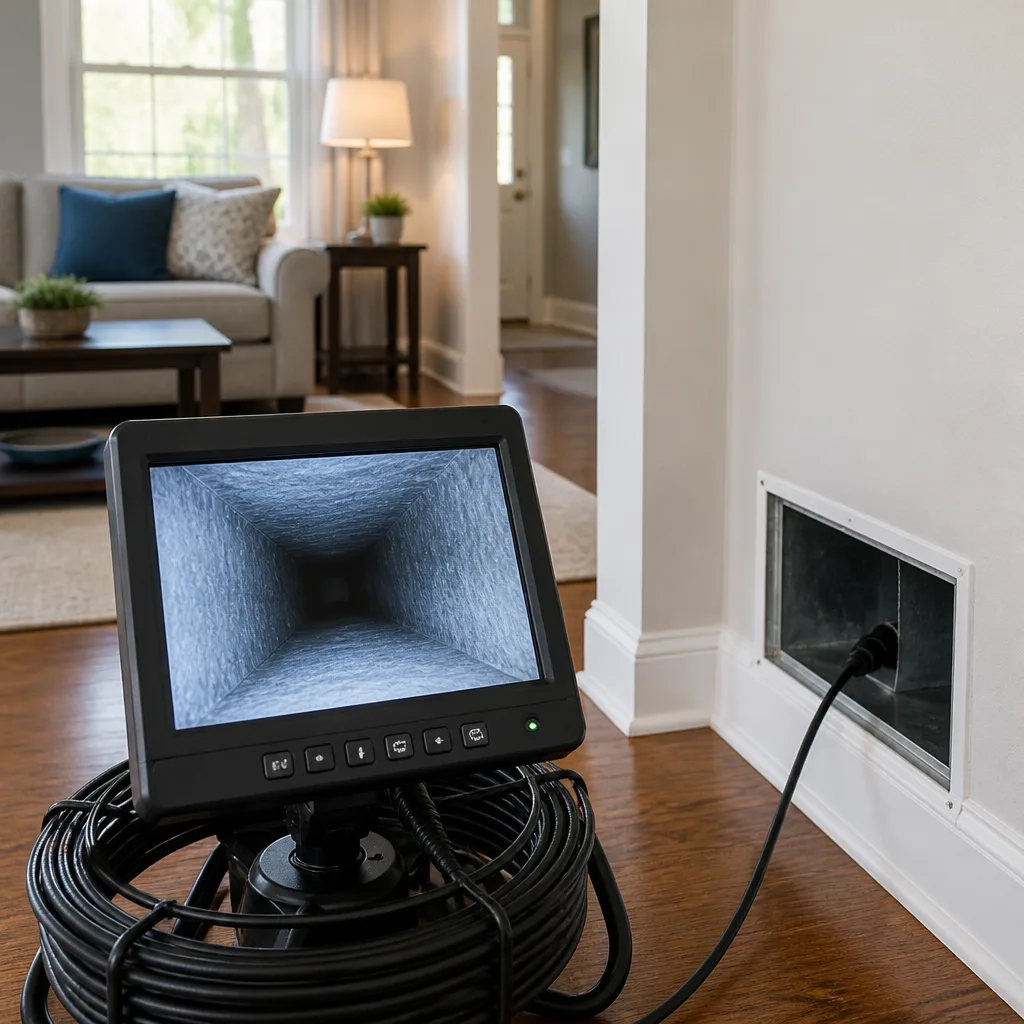 Camera inspection
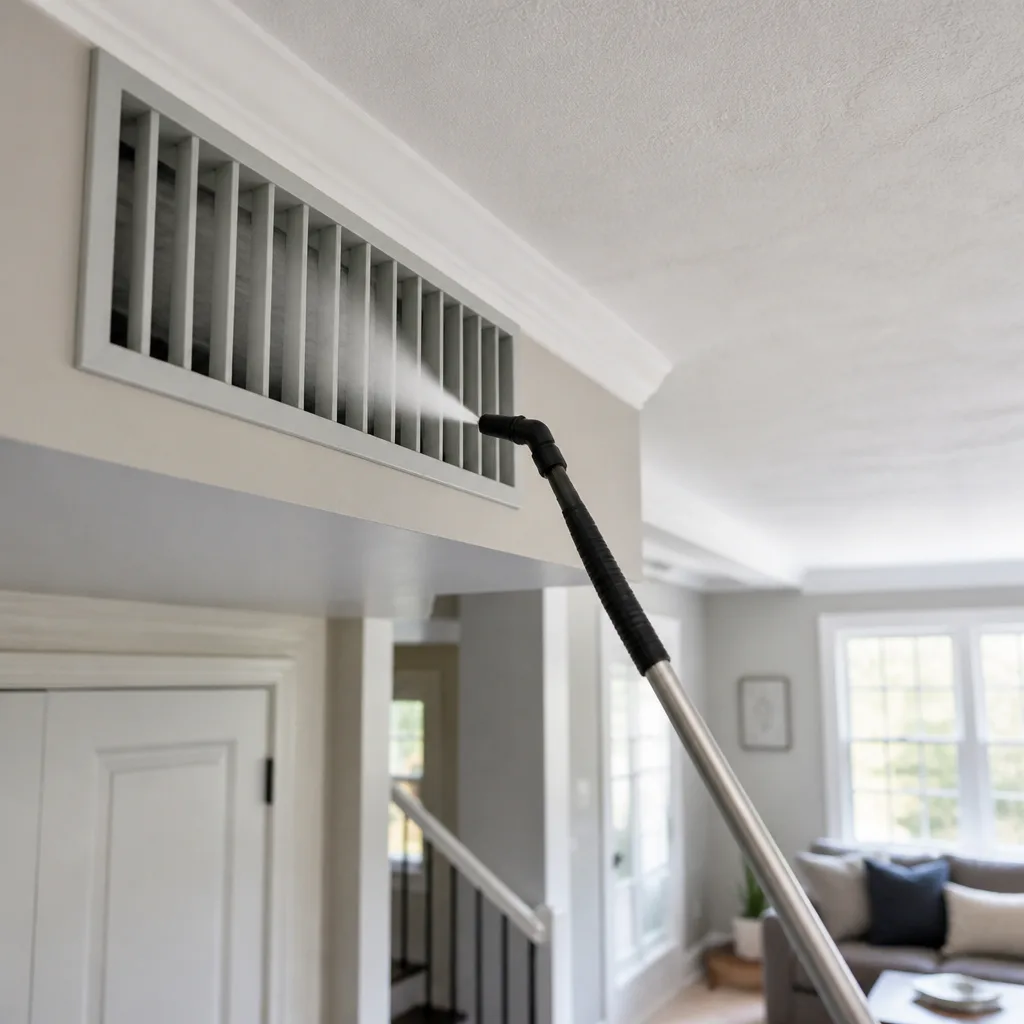 Sanitizing & deodorizing
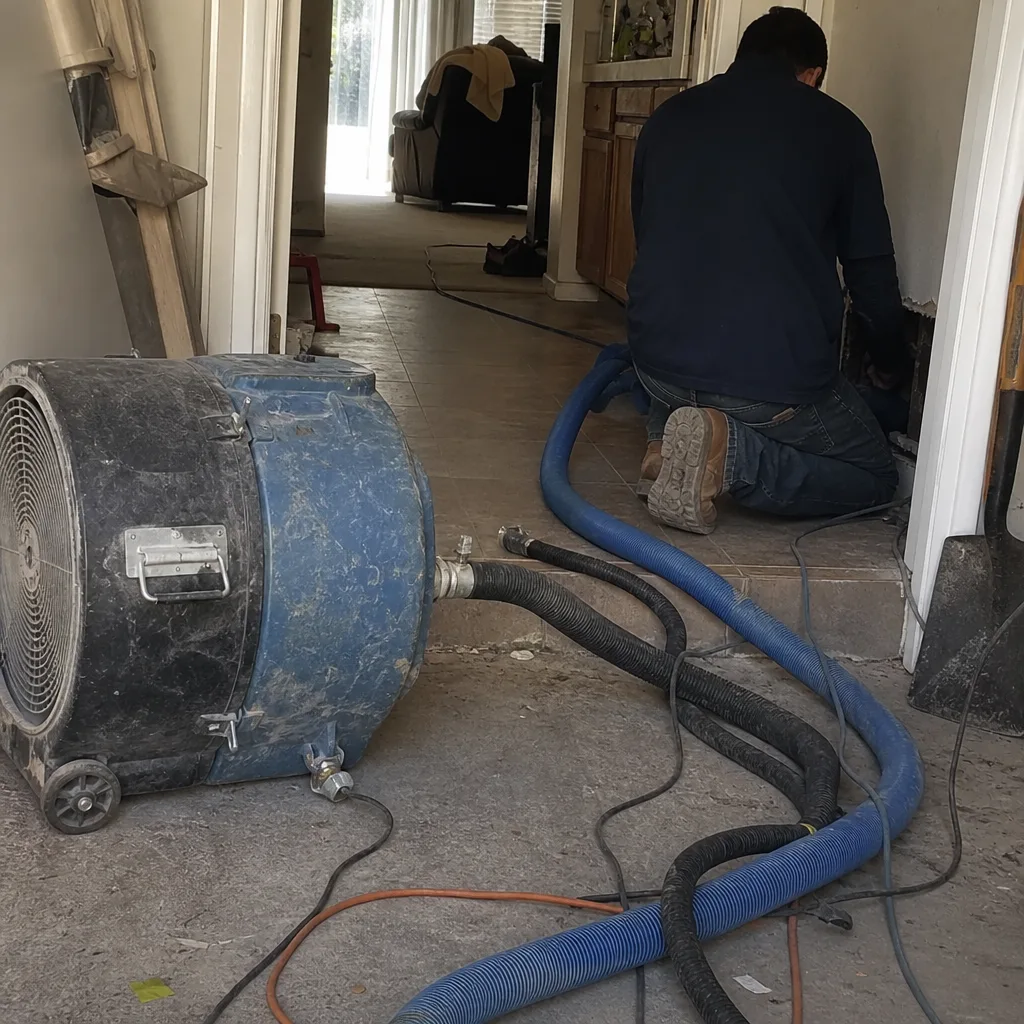
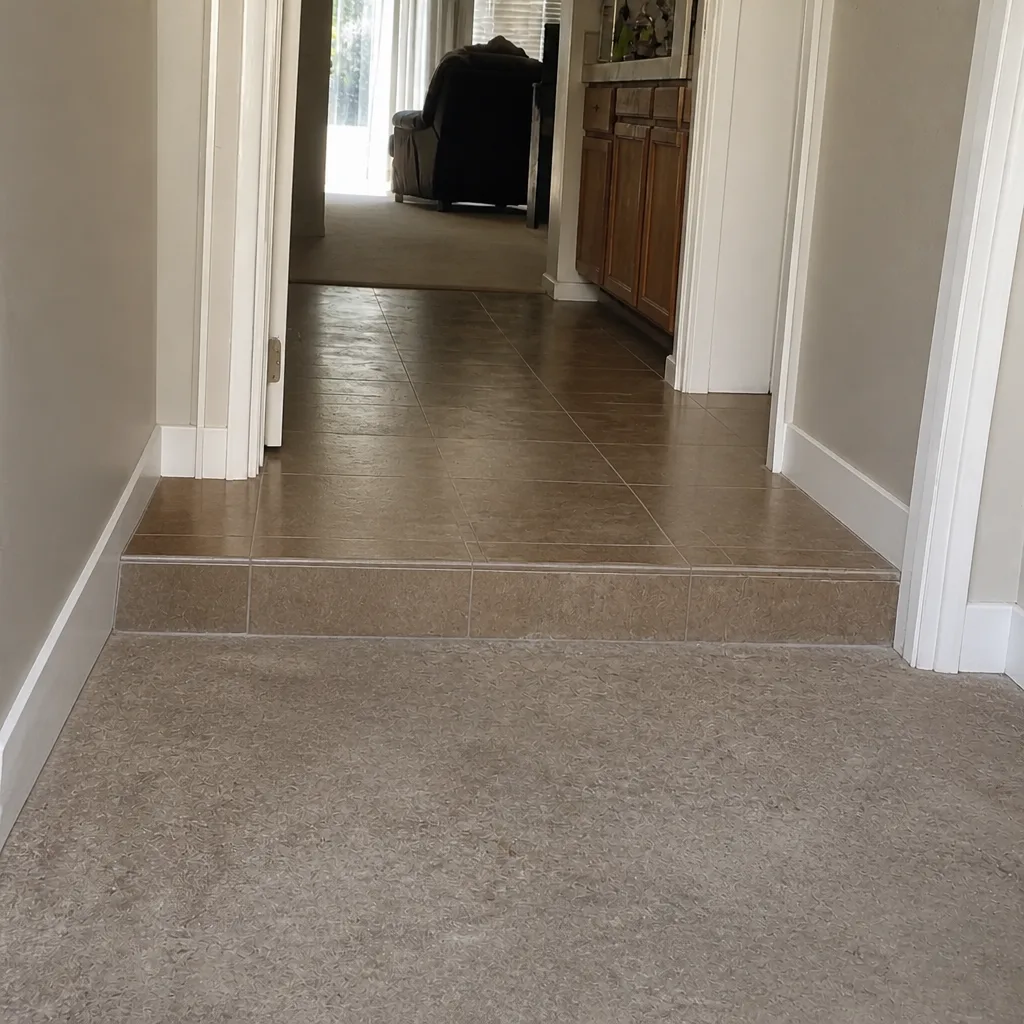
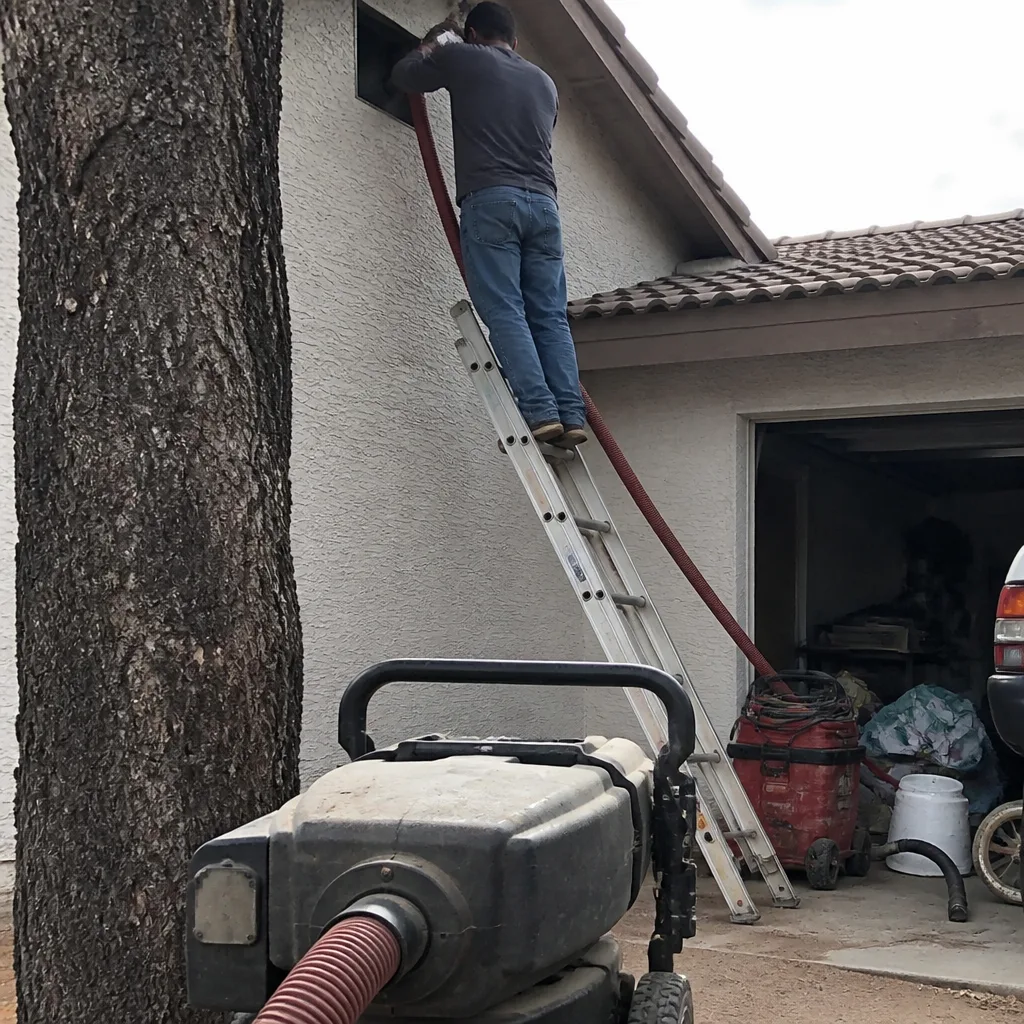
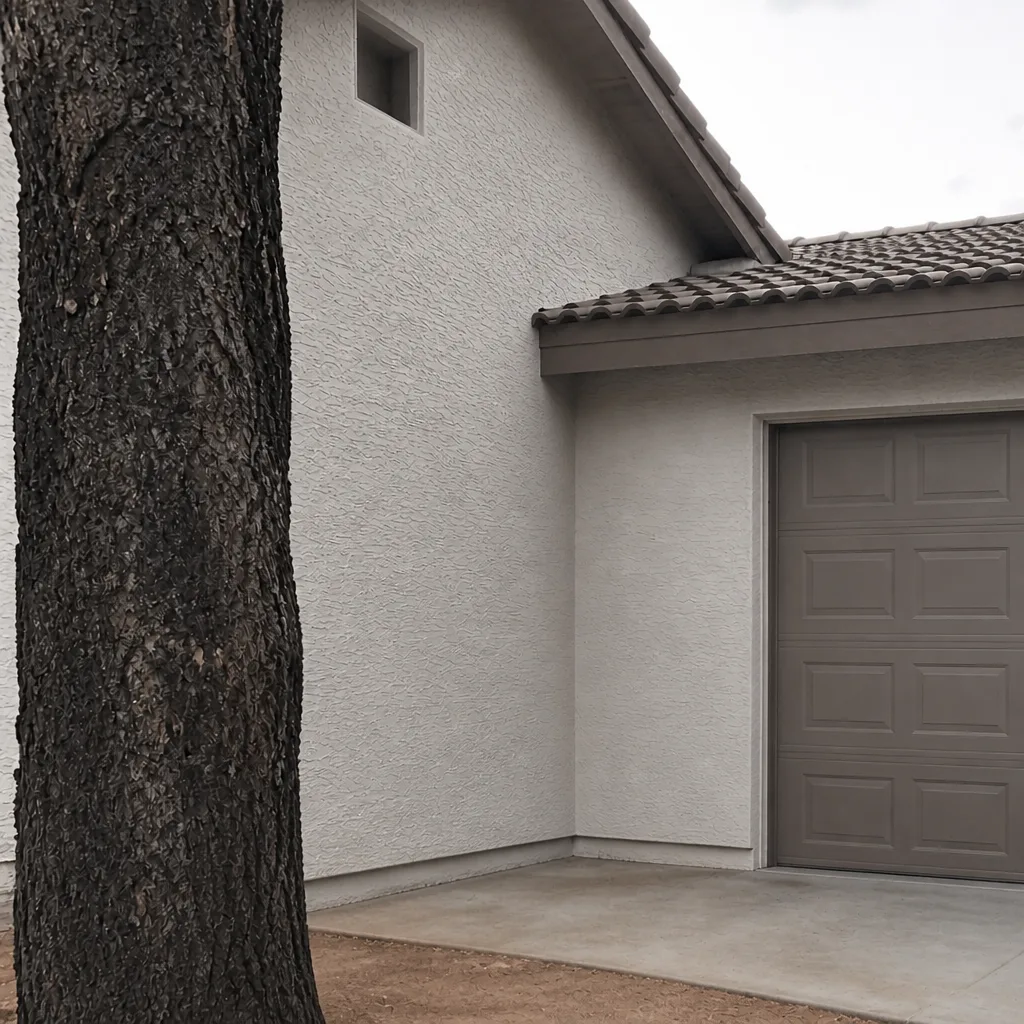
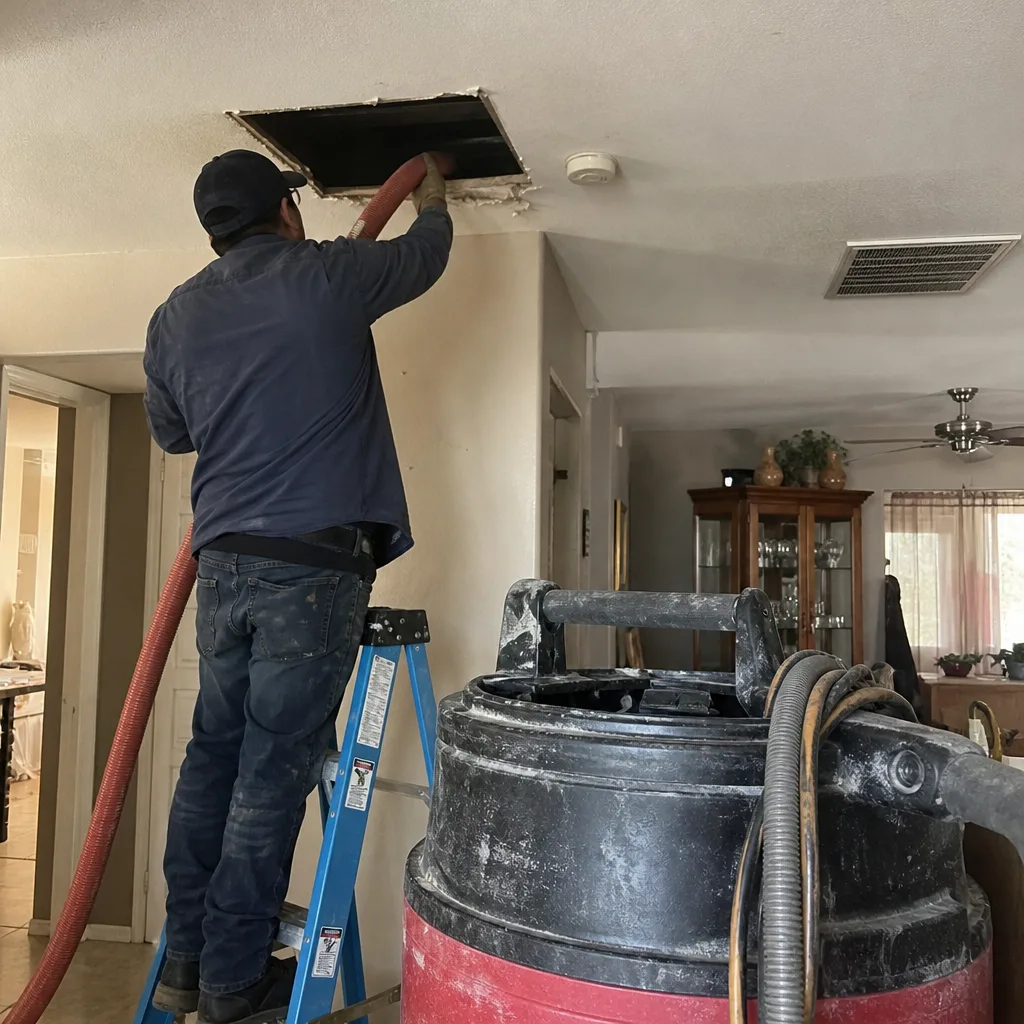
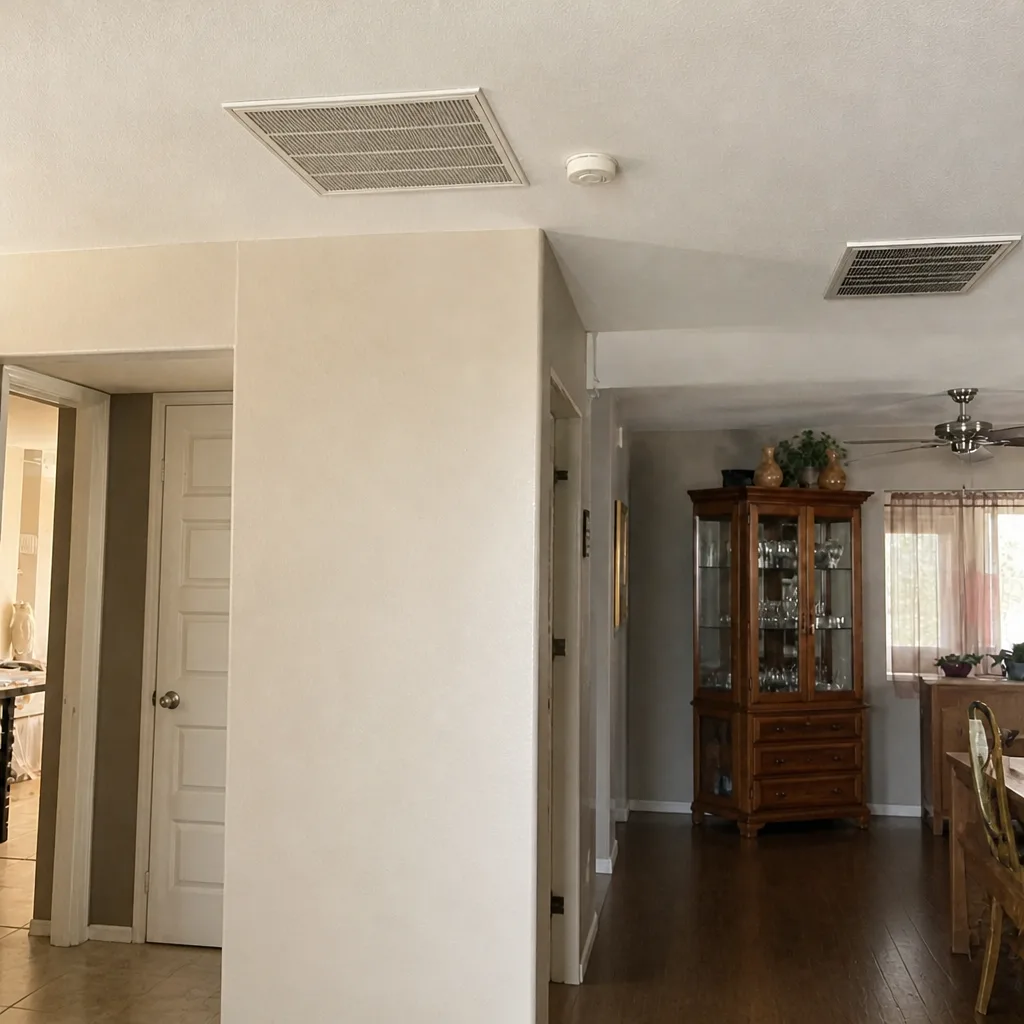
Whole-system duct and dryer vent check with before-and-after photos - you see exactly what came out of your vents
That "$99 whole-house special" is a bait ad - the real number appears once they are in your hallway, or the "clean" is a shop-vac at the register. We photograph the inside of your ducts before and after instead.
The Complete Guide to Air Duct Cleaning in Avondale
Most people assume the dust they see settling on furniture is the whole problem. It isn’t. The dust you can see is the fraction that escaped; the larger load is sitting in the return ducts, the plenum, and the dozens of feet of branch runs hidden behind your walls, slowly cycling back into every room. In Avondale, that load builds faster than in most of the country, because the desert never really switches the HVAC off. This guide maps the system component by component, explains what professional equipment actually does inside a duct, and shows you how to judge the work afterward. No fluff, no scare tactics, just a clear picture of what gets cleaned and why the order matters.
Styles & brands we work with
- Whole-home duct cleaning
- Dryer vent cleaning
- Camera inspection
- Sanitizing & deodorizing
Quick Answer
Air duct cleaning in Avondale means removing accumulated dust, debris, and particulate from the supply and return ductwork, plenums, registers, and air handler cabinet, then containing and extracting the loosened material with negative-air equipment so it leaves your home rather than settling back into your living space. A proper job runs the whole system in the correct order: supply side, return side, and the air handler last. If you also have moisture or pest issues, or gaps in the ducts, that information should feed into the cleaning plan.
Table of Contents
- Why Avondale’s Climate Changes the Duct Cleaning Equation
- Caliche, Monsoon Dust, and What Actually Accumulates
- Component by Component: What Gets Cleaned and Why Order Matters
- What Professional Equipment Does Inside a Duct
- Duct Specialists vs. HVAC Generalists
- Air Duct Repair: Finding and Fixing in One Visit
- The Dryer Vent: A Safety Service, Not an Upsell
- How to Read a Post-Cleaning Report
- Common Mistakes to Avoid
- When to Call a Professional
- Frequently Asked Questions
- The Bottom Line
Why Avondale’s Climate Changes the Duct Cleaning Equation
Avondale sits in the West Valley, where summers are long, temperatures regularly climb past triple digits, and the cooling season stretches well beyond what a national duct-cleaning guide assumes. Avondale averages roughly 299 sunny days a year, and that figure translates directly into HVAC runtime. A system here often runs far more than a system in a moderate climate, which means more air passes through your ducts every year, and more particulate gets deposited on duct walls.
That runtime has a second effect. Systems in mild climates sometimes breathe for half the day and rest the other half. In Avondale the fan is moving air for a much larger share of the year, so dust that would settle quietly in a cooler climate keeps getting re-suspended and pulled through the return.
There’s also the soil. The West Valley has widespread caliche – the hard, calcium-cemented layer that turns to powdery fines when disturbed. New construction, grading, and even a landscaping project send that material into the air, where it settles on outdoor surfaces and finds its way into a home’s return air path. Add the summer monsoon, which lifts a great deal of desert particulate in a short window, and the load on your ducts is different in kind, not just in degree, from what humid-climate guides are designed for.
Practical takeaways for Avondale homeowners:
- Runtime matters more than square footage when estimating accumulation.
- Caliche and fine desert dust behave differently from the lint-heavy dust profile in humid climates – it travels further into the duct and settles on vertical surfaces.
- After a monsoon-season dust event or nearby grading, it’s reasonable to raise the question of a check earlier than you would otherwise.
- Homes near new development in and around Avondale tend to see faster accumulation than older, established blocks.
Caliche, Monsoon Dust, and What Actually Accumulates
If you’ve read a duct-cleaning article written for the East Coast or the Pacific Northwest, it probably talked about humidity, mold growth, and pet dander in roughly equal proportion. That’s not what fills ducts in Avondale. Our accumulation profile looks very different.
Here’s what actually collects inside a West Valley system:
- Caliche-derived fines. Once caliche is broken up by grading or excavation, the resulting powder is very fine. Fine dust travels further along a duct and clings to duct surfaces, especially on the vertical sections that prevent easy settling.
- Construction particulate. Drywall dust, sawdust, and insulation fibers from any renovation enter the return air during construction and often remain for years if no dedicated equipment has ever been through the system.
- Skin cells, hair, and lint. Standard household debris, deposited faster here because the fan runs more often.
- Monsoon dust. Seasonal storms lift a lot of desert material in a short time, which can enter return air paths through outdoor intakes, crawl spaces, and loose duct connections.
- Pollen. Desert bloom cycle material is a real contributor in the spring, and it can film duct surfaces and filters alike.
What you rarely see in Avondale is the heavy humid-climate growth profile, because ambient humidity is low most of the year. That means the cleaning approach is oriented toward dry particulate extraction, not dehumidification or chemical treatment. It also means the wrong cleaning method – too little air movement, no containment – can actually put more fine dust into the air than it removes. That’s the case for professional vacuuming and containing rather than blowing.
Component by Component: What Gets Cleaned and Why Order Matters
A duct system is not one pipe. It’s a set of components that all hold different things, and the cleaning sequence is not arbitrary. Getting the order wrong means re-contaminating clean sections with material from sections you haven’t touched yet. Here’s how a full system breaks down.
1. The supply ducts
Supply ducts carry conditioned air from the air handler to the registers. They collect the finest particulate because that’s what makes it downstream. If you clean supplies first, ambient dust in the air settles back in before the job finishes, which is why supply-side cleaning is done with containment pulling air toward the air handler.
2. The return ducts
Return ducts carry unfiltered or lightly filtered air from the rooms back to the air handler. In every system we’ve seen, this is where the heaviest accumulation lives – larger debris, hair, lint, caliche fines. Returns are done before the plenum because material in the return will otherwise fall into it.
3. The plenum and transition
The plenum is the large box directly above or beside the air handler. It’s the widest part of the system and often the dirtiest, because air slows down there and drops its load. Cleaning the plenum after both supply and return sides prevents that settled material from getting redistributed.
4. The air handler cabinet
The air handler cabinet holds the blower wheel, the evaporator coil, and the filter rack. It’s the component most often skipped by cleaning-only companies. Dust on the blower wheel is real and reduces efficiency; it’s also sensitive enough that cleaning it must be done carefully. Most cleaning jobs ask for at minimum a visual check and evaluation of the cabinet; anything touching the coil or blower should be handled by someone trained on the equipment.
5. The registers and grilles
Registers get cleaned last, after the system is under negative pressure, so anything that falls out of them during removal is captured. This is the reverse of the order many homeowners expect.
6. The filter rack and attached air-quality equipment
If Honeywell or Aprilaire filtration is installed, the filter housing, media cabinet, and bypass architecture all get checked and cleaned to keep the filtration system working as designed. A clean duct connected to a clogged media cabinet defeats the point.
Summary of the standard sequence:
- Set up containment and negative-air equipment.
- Clean return ducts.
- Clean supply ducts.
- Clean the plenum and transition.
- Clean or evaluate the air handler cabinet.
- Clean the filter rack and any attached filtration equipment.
- Remove, clean, and reinstall registers and grilles.
- Vacuum the workspace and confirm the equipment run.
What Professional Equipment Does Inside a Duct
The difference between a friend’s shop vac and a professional duct-cleaning truck is not horsepower. It’s the combination of high-volume negative-air containment, rotary agitation that actually contacts the duct wall, and HEPA filtration on the exhaust so fine particulate leaves the home. In our experience in West Valley homes, that combination is the difference between collecting the settled layer and just moving it around.
The equipment we run includes Rotobrush and Nikro rotary brush systems for wall contact, Abatement Technologies negative-air machines for containment and HEPA-level filtration, and Guardsman components in the air handler where required. Each has a role:
- Rotobrush and Nikro. Rotary brush systems reach duct walls that suction alone can’t separate from, especially with fine caliche dust that clings rather than falls. The agitation lifts material so the vacuum can move it.
- Abatement Technologies negative-air equipment. Keeps the whole duct under negative pressure during the job, with HEPA filtration on exhaust. Without this, the fine-dust component of West Valley ducts can enter the living space during cleaning.
- Honeywell and Aprilaire systems. These are air-quality products already attached to many homes in Avondale. We can clean the filter housings and media cabinets and recommend service appropriate to the equipment already installed, so a filtration system isn’t left working against a dirty duct.
What a shop vac can do is minimal by comparison. It has no containment, no HEPA-grade exhaust, no rotary contact, and a limited capacity for large jobs. It can reach the register opening but won’t meaningfully address the interior. That’s not a knock on the tool – it’s just designed for floors, not ductwork.
Duct Specialists vs. HVAC Generalists
Many HVAC companies offer duct cleaning as one line among many. In practice, that usually means an add-on service performed with a general-purpose vacuum rather than a dedicated duct system, and roughly limited attention to the components that matter. A dedicated duct specialist handles three things and handles them well: air duct cleaning, dryer vent cleaning, and duct repair.
Why that specialization matters in Avondale:
- Technicians train on the duct system, not across trades. Rotobrush and Nikro systems behave differently on different duct materials – flex, sheet metal, and duct board each need the right brush and pressure. A dedicated technician adjusts.
- Duct repair stays inside the same visit. A generalist may clean and then hand off repair work to another contractor, which means the system stays compromised until the second visit. Duct-dedicated work fixes in one place.
- Attached air-quality systems are part of the job. Cleaning a duct doesn’t help if the Honeywell or Aprilaire filter cabinet attached to it is bypassing or clogged. A specialist checks the whole air path.
- Containment discipline. Abatement Technologies negative-air equipment is used on remediation-grade jobs. Applying the same discipline to a residential cleanup isn’t standard practice for a generalist.
The practical test is simple: ask what equipment is used, whether negative-air containment is part of the job, and whether the company can also repair gaps. If the answer is “we use a big vacuum and we don’t do repair,” you’re comparing two very different scopes.
Air Duct Repair: Finding and Fixing in One Visit
Cleaning work almost always reveals something. A brush run through a flex duct can expose a joint that came loose years ago. A return-side pull can show a gap where a branch run was never properly taped. In Avondale, we regularly find duct board separated at joints after years of thermal cycling – the material expands and contracts daily in the summer heat and separates at seams over time.
Air duct repair as a standalone service matters because these findings don’t fix themselves. A cleaned system with a leaking duct is still losing conditioned air into the attic or crawl space, which means higher energy bills and a system working harder than it should. The two problems share a common origin, so they deserve a common fix.
What repair work includes:
- Sealing gaps and joint separation at branch runs, plenums, and connections to the air handler.
- Replacing damaged sections of flex or duct board where the material can’t be sealed reliably.
- Reconnecting disconnected runs – more common than homeowners expect, especially in attics after construction.
- Re-taping and mastic-sealing joints to standard practices so the repair holds.
The one-visit advantage is real. When the duct specialist who cleaned the system is also the one repairing it, you don’t wait for a second contractor, don’t pay twice for a return trip, and don’t have to guess which finding was real and which was invented to upsell you. If you want to plan ahead, learn more about the duct cleaning service and how repair findings are handled before the job starts.
The Dryer Vent: A Safety Service, Not an Upsell
Dryer vent cleaning is separate from air duct cleaning and it matters for a different reason. It’s a fire-safety service, not a comfort service. Lint accumulates inside the duct over time, and restricted airflow through the vent raises dryer operating temperatures. This is a documented fire risk in residential homes across the country, and it’s a service we take seriously enough to offer as a standalone call.
Signs that a dryer vent is restricted:
- Clothes take noticeably longer to dry than they used to.
- The dryer exterior feels unusually hot to the touch during a normal cycle.
- The lint trap fills quickly and completely.
- There’s a burning or musty smell near the dryer.
- The exterior vent flap doesn’t open fully or doesn’t open at all.
In Avondale, the fine dust that fills ducts also finds its way into dryer vent lines because the same dry air and airborne particulate settle on the lint screen and vent walls. It’s a single-visit service and worth doing on its own schedule, separate from duct cleaning. You can find the specifics on our dryer vent cleaning service page.
How to Read a Post-Cleaning Report
A professional duct cleaning job produces evidence. Not a verbal “all done,” but documented before-and-after images and a written report you can actually evaluate. That standard is the single best defense against the bait-and-switch reputation that the duct cleaning trade has earned across the country, and it’s something to insist on before you book any job.
What a credible report includes:
- Before-and-after photos of your own ducts, not stock images. Each major component (supply, return, plenum, air handler cabinet) should be documented.
- Photos taken from inside the duct, not just at the register opening, so the interior surface is visible.
- Inspector and equipment notes describing the method used and the condition found.
- A list of repair findings, if any, with photos showing the specific gaps or damage.
- Filter condition noted, and any recommendation about Honeywell or Aprilaire cabinets if installed.
- Signed job summary matching the scope you agreed before work started.
If a company can’t show you before-and-after photos of your own system, that’s a signal about the quality of the work, not the quality of their marketing. A one-flat-price-per-system job should come with that evidence as standard, and if a technician on site tries to convert that into a per-vent price or a coupon price that balloons once they’re inside, walk away from that quote before any work begins.
Common Mistakes to Avoid
- Letting a company quote per vent instead of per system. Per-vent pricing exists to make the estimate look low; the real scope is the whole system, including the plenum and air handler cabinet. Insist on a flat, per-system price agreed before work starts.
- Skipping the plenum and air handler cabinet. Many “cleaning” jobs are just return-side vacuuming. The dirtiest components get skipped because they’re harder and slow down the visit.
- Assuming no photos means no issue. If you don’t have before-and-after documentation of your own ducts, you don’t actually know what was done. Ask up front.
- Booking the cheapest quote without checking equipment. A shop vac and a truck-mounted system aren’t the same tool, and a West Valley home with caliche fines in the return line needs the containment that professional equipment provides.
- Ignoring duct findings “to handle later.” A leak found during cleaning usually becomes an energy bill you keep paying. If the company can fix it during the visit, that’s the efficient call.
- Treating dryer vent cleaning as optional. In a hot, dry climate, lint stays dry and volatile. The service is a fire safety check, not a convenience.
- Assuming all cleaners handle repair and air-quality equipment. If your system has Honeywell or Aprilaire filtration attached, the cleaning and the filter cabinet need to be evaluated together. Confirm before you book.
When to Call a Professional
Some situations call for a professional duct specialist rather than a self-check. If anyone in the home has respiratory sensitivity and you can’t remember when the ducts were last cleaned, it’s worth getting an evaluation. If you’ve just finished a renovation, or bought a home that had one in the last few years, the return line likely holds construction particulate that only professional equipment can remove. If your system has visible dust blowing from registers after a filter change, or you’ve found a loose duct joint in the attic, repair and cleaning are usually the same visit. And if you can’t see inside the ducts and want documented before-and-after evidence, that’s the point at which asking for a professional estimate is the sensible move. Duct Cleaning Avondale offers free estimates in Avondale – call (866) 361-9304. We answer 24/7. Fast dispatch from 7am to 7pm, Sunday through Friday.
Frequently Asked Questions
Air duct cleaning in Avondale is priced per system, by a written estimate, so the number reflects the actual scope of your home’s ductwork rather than a per-vent teaser price. A home with a single air handler and a standard branch layout sits in a different range than a larger home with two systems, multiple zones, or repair work that needs to be done during the visit. The estimate is free, and the written estimate sets the final price. Call (866) 361-9304 for an exact quote.
Because Avondale systems run far more hours per year than systems in moderate climates, dust and particulate accumulate faster, so the interval is usually shorter than the national “every three to five years” figure you’ll read online. Homes near new construction, recent renovations, or with pets often need attention sooner. If you’re unsure, a professional inspection with photos is the most useful answer to the “am I due” question.
Cheaper quotes usually reflect a smaller scope, not a better price. They often skip the plenum and air handler cabinet, use a shop vac instead of containment-grade equipment, and price per vent so the total is unclear until a technician is on site. A flat per-system price with before-and-after photos of your own ducts and a written report is what a professional job produces. Call (866) 361-9304 for an exact quote and a scope you can compare.
You know because you have photos of your own ducts, taken inside the duct before and after the cleaning, plus a report matching the scope you agreed before work started. A company that can’t document the work at that level is asking you to take its word, and in a trade with the reputation for bait-and-switch this one has, that’s not enough. Ask for documentation before booking, not after.
Air duct repair is a standalone service we offer, and in the vast majority of cases the repair is done during the same cleaning visit. When the brush reveals a gap, a separated joint, or a disconnected run, fixing it in the same call avoids a second contractor and a second trip, and it means the system you just cleaned stops leaking. Repair findings are documented with photos so you can see exactly what was found before the fix.
Yes. Honeywell and Aprilaire are air-quality products we work with regularly, and the filter housing, media cabinet, and bypass components attached to your ductwork need to be cleaned and evaluated as part of the system, not left out of the job. Cleaning ducts without checking the filter equipment attached to them undercuts the whole system. If you’re not sure what’s installed, mention it when you book so the right equipment comes along. If you’re also weighing a general check of your Avondale home’s air quality, our team can review the whole air path in one visit.
The Bottom Line
Air duct cleaning in Avondale isn’t a generic service performed identically across the country. Caliche fines, monsoon dust, construction particulate, and near-year-round HVAC runtime create an accumulation profile that a humid-climate guide can’t address. What matters is the scope: the whole system in the correct order, professional equipment with containment, a flat per-system price agreed before the work starts, and documented before-and-after evidence you can evaluate. Duct specialists – not generalists who add cleaning as a line item – handle this work properly, including repair and dryer vent safety. If you’ve been putting it off because you’ve been unsure who to call, call us. We answer 24/7. Fast dispatch from 7am to 7pm, Sunday through Friday.
Call (866) 361-9304 for a free estimate on air duct cleaning, dryer vent cleaning, or air duct repair. Our technicians have up to 9 years of experience. We answer 24/7, and fast dispatch runs from 7am to 7pm, Sunday through Friday. One flat price per system, agreed before work starts, and before-and-after photos of your own ducts – because that’s what a professional job looks like.
Written by the team at Duct Cleaning Avondale.
See the difference
 Before
 After
 Before
 After
 Before
 After