
Last updated November 16, 2026
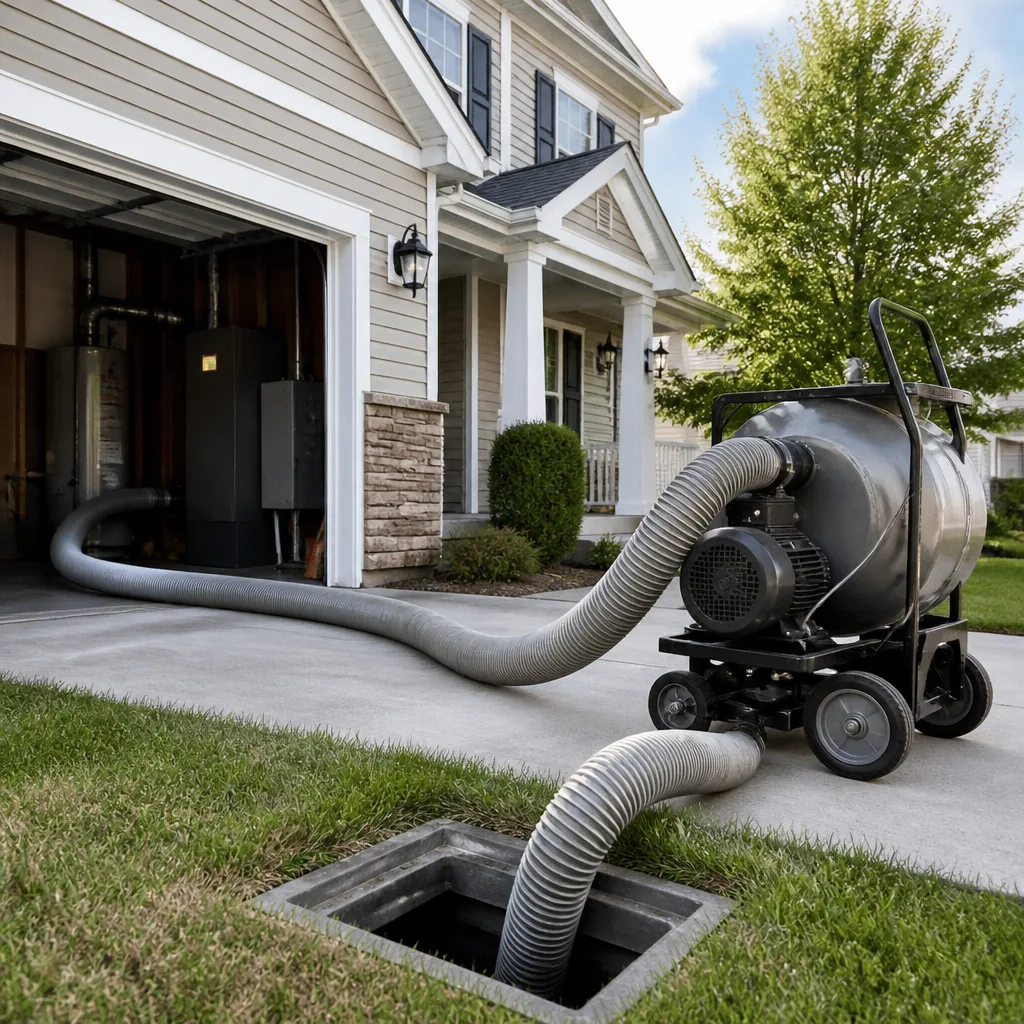 Whole-home duct cleaning
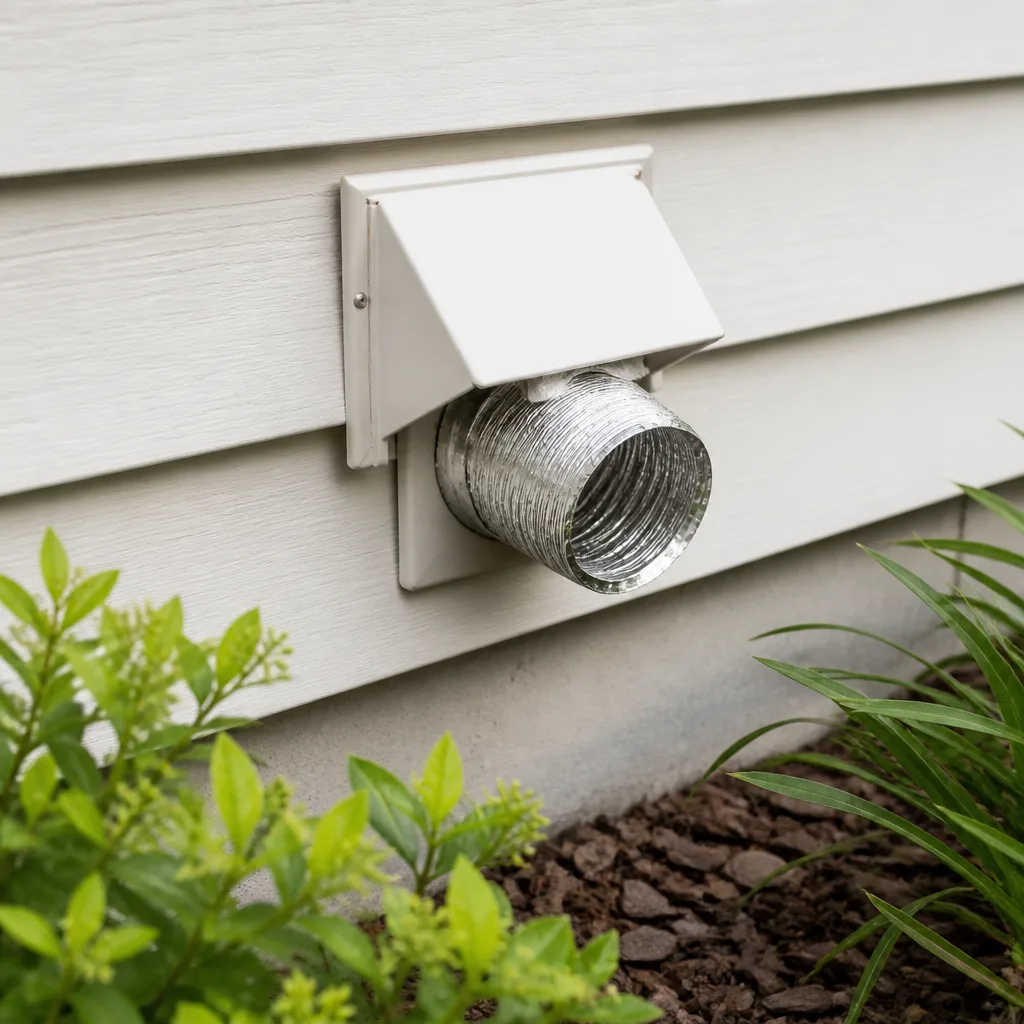 Dryer vent cleaning
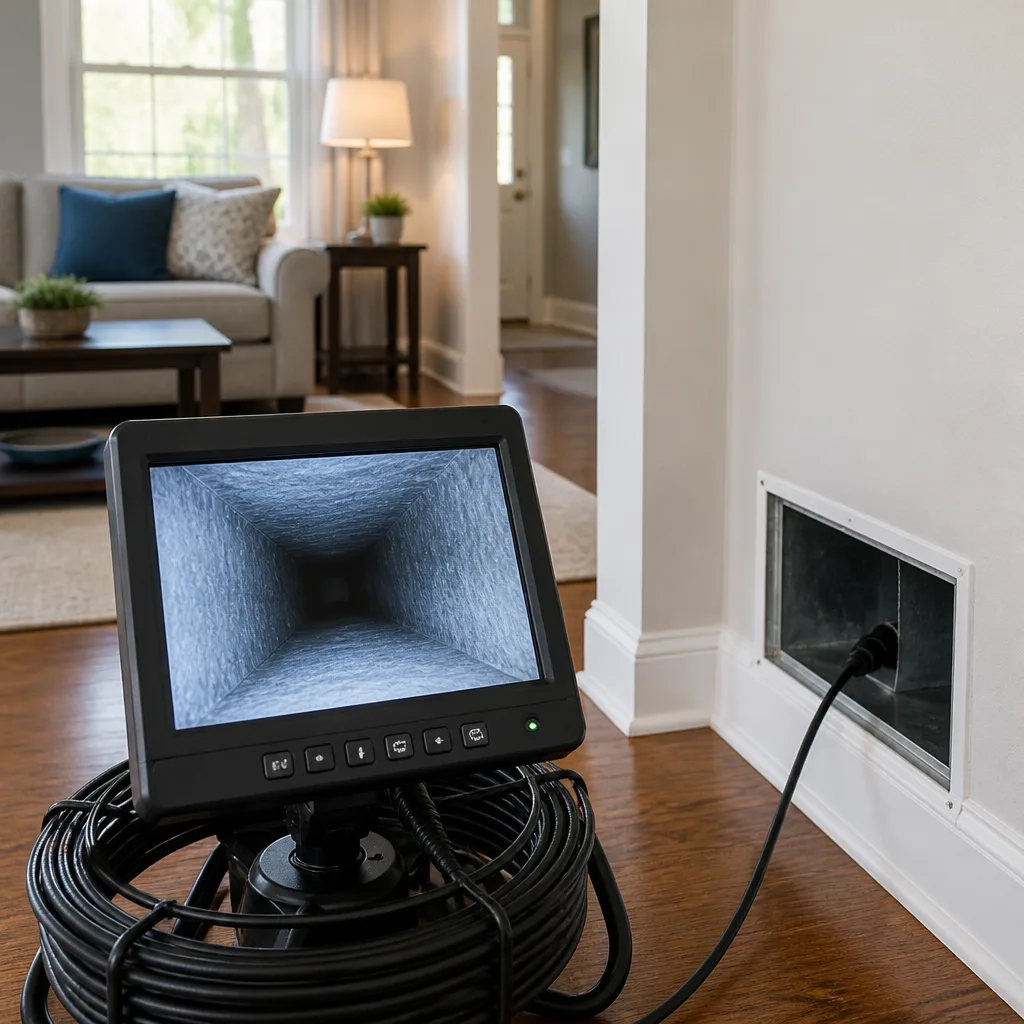 Camera inspection
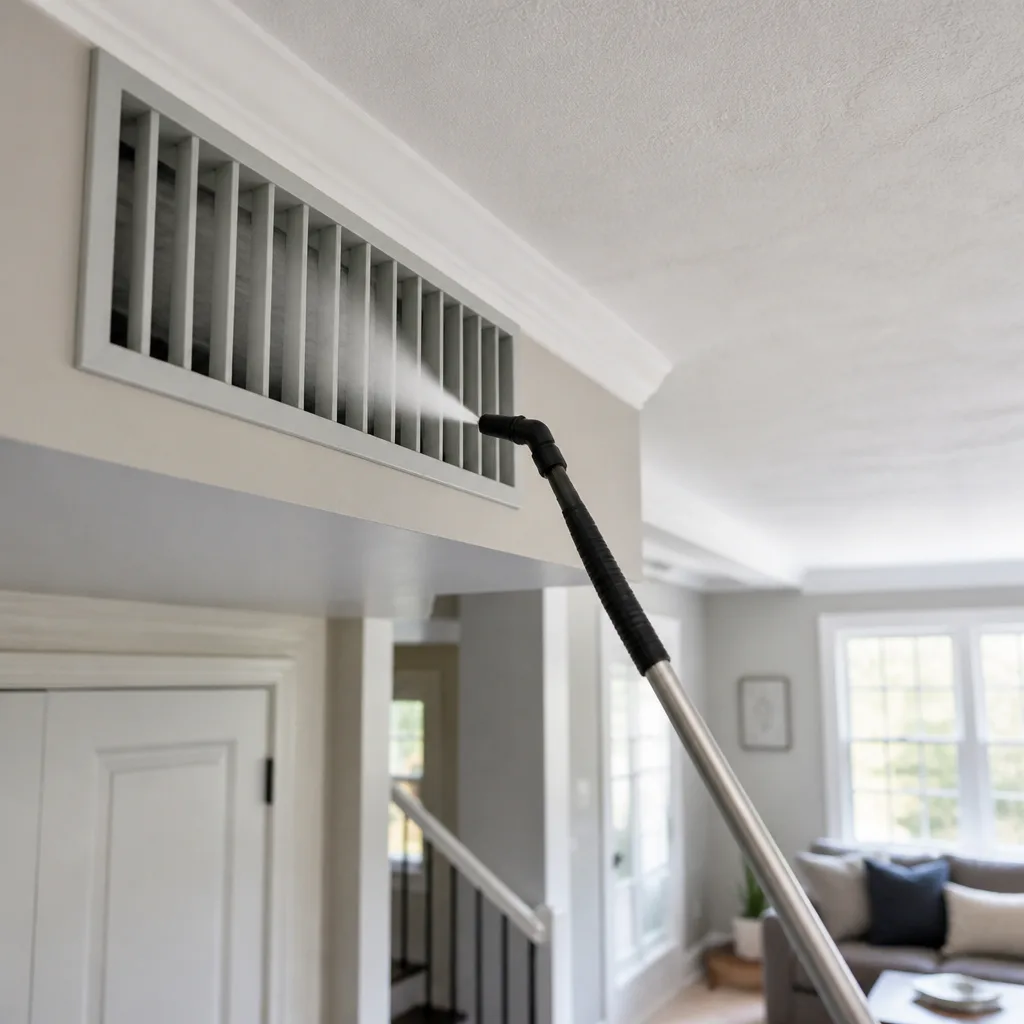 Sanitizing & deodorizing
Whole-system duct and dryer vent check with before-and-after photos - you see exactly what came out of your vents
That "$99 whole-house special" is a bait ad - the real number appears once they are in your hallway, or the "clean" is a shop-vac at the register. We photograph the inside of your ducts before and after instead.
Air Duct Cleaning Warning Signs: An Avondale Homeowner’s Reference Guide
Most warning-sign lists stop at the symptom: dust, smells, high bills. That’s not much help when you’re standing in your hallway trying to explain the problem to a contractor. The same musty smell can come from two completely different duct conditions, and the fix for one is routine cleaning while the fix for the other is an inspection before anything else happens. In Avondale, where the summer heat pushes an AC system hard and monsoon moisture arrives fast, the gap between those two conditions matters. This guide maps each common sign to the duct condition behind it, so you can describe what you’re seeing in precise terms and get the right work done the first time.
Quick Answer
Air duct cleaning warning signs include visible dust blowing from registers, uneven airflow between rooms, rising energy bills without a rate change, musty or stale odors when the system starts, and dust settling quickly after cleaning. In Avondale, these signs usually point to one of two things: accumulated debris inside the duct system, which cleaning addresses, or leaks and disconnected runs, which need repair. Distinguishing between them is the whole game.
Styles & brands we work with
- Whole-home duct cleaning
- Dryer vent cleaning
- Camera inspection
- Sanitizing & deodorizing
Table of Contents
- Symptom-to-Cause: What Each Warning Sign Actually Tells You
- Dirty Ducts vs. Leaking Ducts: Two Problems That Look Alike
- Warning Signs That Show Up Right After Moving Into a Resale Home
- The Post-Renovation Pattern: Construction Dust in Your Ducts
- Monsoon Season and the Musty Smell That Means Something Different
- When the Warning Sign Means Structural Duct Damage
- The Warning Sign Most Homeowners Miss: The Dryer Vent
- How a Professional Inspection Should Actually Go
Symptom-to-Cause: What Each Warning Sign Actually Tells You
A warning sign is only useful if it points to a cause. Here’s how the most common symptoms in Avondale homes map to the duct condition behind them, so you can walk a contractor through what you’ve noticed instead of describing a vague “something’s off” feeling.
- Visible dust blowing from supply registers: Loose debris sitting in the duct runs closest to the register, or a gap in the duct pulling dust from a crawl space or attic before it reaches the vent. If the dust appears only at certain registers, suspect a localized leak. If it’s everywhere, the whole system likely needs a pass.
- Uneven airflow between rooms: A partially blocked run, a crushed flex duct, or a damper left in the wrong position. This is rarely a cleaning problem on its own; it usually needs the duct to be opened and inspected.
- Rising utility bills with no rate change: Restricted airflow forcing the system to run longer, often caused by debris buildup on the return side or a leak that’s dumping conditioned air into an unconditioned space.
- Musty or stale odor at system start: Biological growth on duct surfaces, typically in the cooler return runs where condensation has lingered. It can also indicate moisture intrusion from outside, which is a separate and more serious finding.
- Dust settling on furniture within days of cleaning: Either cleaning didn’t reach the full system, or a leak is pulling new dust in constantly. A before-and-after inspection of the duct interior settles the question.
In Avondale, the return side of the system is often where the worst buildup sits. The dry air outside doesn’t mean the ducts stay dry; condensation forms when cool supply air meets warm return air, and that moisture feeds growth on the interior surfaces. Knowing which side of the system your symptom comes from helps a contractor pinpoint the work.
Dirty Ducts vs. Leaking Ducts: Two Problems That Look Alike
From inside your living room, a dirty duct system and a leaking one produce almost identical symptoms: dust, uneven airflow, higher bills. The difference shows up when someone looks inside the ductwork. Cleaning fixes the first. Repair fixes the second. If you clean a leaking system without sealing it, the dust comes back and you’ve paid twice.
Here’s how to tell them apart before you call.
- Check where the dust appears. Even dust at every register suggests the whole system needs cleaning. Dust concentrated at one or two registers in Avondale homes often means a disconnect in the run feeding those vents.
- Note the smell pattern. Odor that appears only when the system starts and fades after a minute points to buildup sitting on the duct surfaces. Odor that lingers all the time can mean outside air is being pulled in through a gap.
- Watch for pressure changes. A room that gets strong airflow on mild days and weak airflow during the hottest Avondale afternoons may have a leak that worsens as system pressure rises.
- Look for dust trails at the air handler. Dust streaks around the plenum and cabinet seams are a strong sign of a leak that’s been pulling in attic air for a while.
We carry Rotobrush and Nikro equipment because cleaning the interior of a duct system properly requires professional-grade tools, not a shop vacuum. But cleaning alone doesn’t seal a gap. That’s why we offer air duct repair as a standalone service: our technicians close gaps, seal leaks, and fix damaged runs, and a problem found during cleaning can be corrected in the same visit instead of being left open for a second contractor. That single-visit repair capability is the practical difference between a specialist and a cleaning-only crew.
For the full cleaning service, see air duct cleaning.
Warning Signs That Show Up Right After Moving Into a Resale Home
Homeowners often call within the first few weeks of moving into a resale home in Avondale with the same set of complaints: dust, a faint smell when the AC runs, and rooms that never quite cool the way the thermostat suggests they should. That pattern is a fingerprint. It usually means the previous owner never had the ducts cleaned, or had it done years earlier and never followed up.
What to look for after closing:
- Dust buildup on ceiling fan blades and blinds within the first month. Fresh dust on surfaces that were clean at showing suggests the system is actively distributing debris, not just settled dust being disturbed.
- A smell you can’t place when the AC comes on. New owners sometimes assume it’s paint or carpet. When it appears only at system start, it’s usually coming from inside the ducts.
- Register covers with visible dark grime. That residue takes years to build up and tells you the system has been running without service.
- Rooms that don’t match the thermostat. A common sign that a run was damaged during a past renovation or never properly connected.
- Filter that fills up faster than it should. If you’re pulling a load of dust out of the filter every couple of weeks, the system upstream of it is likely packed with debris.
The useful move here is to have the full system inspected before the first summer you live there. Avondale’s heat is hard on a system that’s already restricted, and finding the buildup in spring is cheaper than finding it in July when the AC can’t keep up. A cleaning plus a repair check in the same visit gets your ducts into a known condition so you’re not guessing for the next five years.
If you’re new to the area, our Avondale page covers what’s specific to the local housing stock and climate, which can help you understand what you’re working with.
The Post-Renovation Pattern: Construction Dust in Your Ducts
Standard cleaning timing doesn’t apply after a renovation in an Avondale home. Drywall dust, insulation fibers, and construction debris get pulled into the return system the moment the crew turns the AC on, and those particles lodge in the duct lining in ways ordinary household dust doesn’t. A system that was in good shape before the remodel can be carrying a load of construction dust within days of the drywall going up.
The warning signs after a renovation look different from the ones on a normal service cycle:
- Fine white dust settling on every surface in the days after drywall work.
- A chalky taste or smell in rooms closest to the work area when the system runs.
- Insulation fibers visible on register grilles.
- Visible dust on the inside of the air handler cabinet, which is a strong sign that debris has gone further into the system than usual.
If the renovation involved anything beyond surface work, the right time to schedule is after the crew has finished and before you start regular occupancy, not months later. We use Abatement Technologies negative-air machines on jobs where containment matters, which is exactly the kind of setup construction dust warrants. And because we work with Honeywell and Aprilaire air-quality products, we can also assess the filtration equipment attached to your system and confirm it’s sized and seated properly before the ducts go back into service.
If you’ve also had roof work or exterior work done, this applies even more, because outside dust has a way of finding its way into a return that’s not fully sealed. Duct repair after construction is often part of the same visit as cleaning, which is why we combined those services under one roof rather than treating them as separate products.
Monsoon Season and the Musty Smell That Means Something Different
A musty smell after the AC kicks on and a musty smell after a monsoon storm look identical to you. They point to entirely different duct conditions, and they call for different responses.
The regular musty smell is biological growth on duct surfaces, typically accumulated over months in the return runs where condensation has been allowed to sit. Cleaning removes it, and confirming the filtration setup keeps it from returning quickly.
The post-monsoon smell is different. It’s a moisture infiltration event, meaning water has gotten into the ducts or the surrounding building assembly during the storm, and the smell you’re noticing is the first sign. In that case a routine cleaning is not the right first step. An inspection is. If water is still present or has damaged the duct lining, cleaning before drying and repair just spreads the problem.
What to do when this happens:
- Check the registers for water. Damp grilles or drip marks mean moisture has entered the runs. Write down which rooms.
- Note the timing. A smell that appeared right after a storm and hasn’t faded is an infiltrated duct. A smell that’s been there for months is buildup.
- Wait for the inspection before you schedule a cleaning. If the duct lining is wet, cleaning needs to happen after the moisture has been addressed, not before.
- Ask about the attic and exterior penetrations. Any opening in the duct run exposed to outside air is a candidate for infiltration.
Avondale sees monsoon activity most summers, and the pattern repeats: a system that was fine in June gets a smell in August. Calling us for an inspection after the storm, rather than assuming the answer is a cleaning, keeps the situation from getting worse. If the ducts are structurally fine, we’ll clean them. If they’re not, we repair them as part of the same service.
When the Warning Sign Means Structural Duct Damage
Some warning signs fall outside the scope of cleaning entirely. If any of the following are happening in your Avondale home, the ducts need repair before a cleaning makes sense, because cleaning a damaged system is wasted effort.
- Airflow that’s strong in some rooms and almost nonexistent in others, especially when the pattern doesn’t change after a filter change.
- Dust accumulating at one register only, particularly at the ceiling where a flex run connects to the plenum.
- Visible sagging or kinked flex duct in the attic or crawl space.
- Whistling or whooshing sounds at registers that didn’t used to be there, which usually means a leak downstream or a collapsed run.
- Dust blowing out of a register that was just cleaned, which points to a gap feeding debris into the run.
- Odor that doesn’t fade even when the system is running, which can indicate outside air being pulled in through a break.
Our technicians have up to 9 years of experience working specifically on duct systems, which matters here because structural calls are exactly where generalist HVAC companies guess and specialists diagnose. A cleaning-only contractor will either clean the system and hand you a receipt with the problem still in place, or tell you to call someone else. We close gaps, seal leaks, and repair damaged runs, then clean the system afterward so the work is complete on one visit.
For the repair side of our work, ask about it when you schedule your cleaning. It’s a standalone service and can be booked on its own.
The Warning Sign Most Homeowners Miss: The Dryer Vent
Not all duct problems live in the HVAC system. The dryer vent is a duct, it collects lint on every load, and it’s a leading cause of residential fires. The signs are quieter than HVAC signs and easier to dismiss, which is why lint fires are so common in homes where the HVAC ducts were recently cleaned.
- Clothes take two cycles or more to dry.
- The dryer cabinet gets noticeably hot during a cycle.
- The exterior vent flap doesn’t pop open freely when the dryer runs.
- A burning or singed smell in the laundry area.
- Lint visible on the floor behind the dryer, which means it’s already escaping the vent route.
Dryer vent cleaning is a discrete service we perform, not an upsell added to a duct cleaning invoice. It’s a single visit, and it’s one of the clearest safety improvements a homeowner can make. If you’re already having your HVAC ducts cleaned, we can handle the dryer vent in the same appointment. If you’re not having your ducts cleaned, the dryer vent still deserves its own call. See dryer vent cleaning for what the visit involves.
How a Professional Inspection Should Actually Go
A real duct inspection is more than a technician glancing at the registers. Here’s what a professional visit looks like, in sequence, so you know what to expect and can spot a rushed one.
- Ask about symptoms first. You describe what you’ve noticed and where. The technician maps your descriptions to specific sections of the system before touching anything.
- Inspect inside the ducts with a camera. Visual confirmation of buildup, moisture, or damage inside the runs, not just at the registers.
- Check the air handler and plenum. Gaps, dust streaks, and filter seating are all cheap to check now and expensive to ignore.
- Test airflow at multiple registers. Weak spots identify runs that need repair rather than cleaning.
- Show you the findings. Photos of your ducts, before and after, so you’re not taking anyone’s word for the work.
- Quote the work as one flat price per system. Agreed before any cleaning starts, not per-vent and not adjusted after the fact.
That last point is the one homeowners should hold any contractor to. Bait-and-switch pricing is the biggest complaint in this trade, and the way to avoid it is to insist on a whole-system quote before work begins. Our estimates are free, and the written estimate sets the final price.
For the overall service on this side of Avondale, start at Duct Cleaning Avondale.
Common Mistakes to Avoid
- Cleaning before checking for leaks. In Avondale homes, a leaking duct is a common cause of dust recurrence. Cleaning without sealing means the dust comes back within weeks, and you’ve paid twice for the same problem.
- Scheduling a cleaning right after a monsoon storm without an inspection. Wet ducts need to be dried and assessed before cleaning. Cleaning wet duct lining can spread moisture and make the problem worse.
- Assuming that post-renovation dust will settle on its own. Drywall dust and insulation fibers work their way into the return system and stay there. Waiting doesn’t help, and air fresheners just mask the symptom.
- Accepting a per-vent quote. A per-vent price invites the technician to find “extra” vents or sell add-ons once they’re already in your home. A whole-system flat price agreed before the work starts keeps the job on the rails.
- Treating the dryer vent as an optional extra. A clogged dryer vent is a fire hazard. If it’s been years since the last cleaning, that’s a call worth making regardless of what the HVAC system is doing.
- Ignoring a persistent smell after a storm. A smell that appears after monsoon activity and doesn’t fade is a sign of moisture in the system. It’s not going to resolve on its own with a filter change.
- Hiring an HVAC generalist who does ducts on the side. Duct specialists use dedicated equipment and know what to look for in the interior of a duct. A generalist will often clean the accessible sections and leave the rest, which is where the real problem usually sits.
See the difference
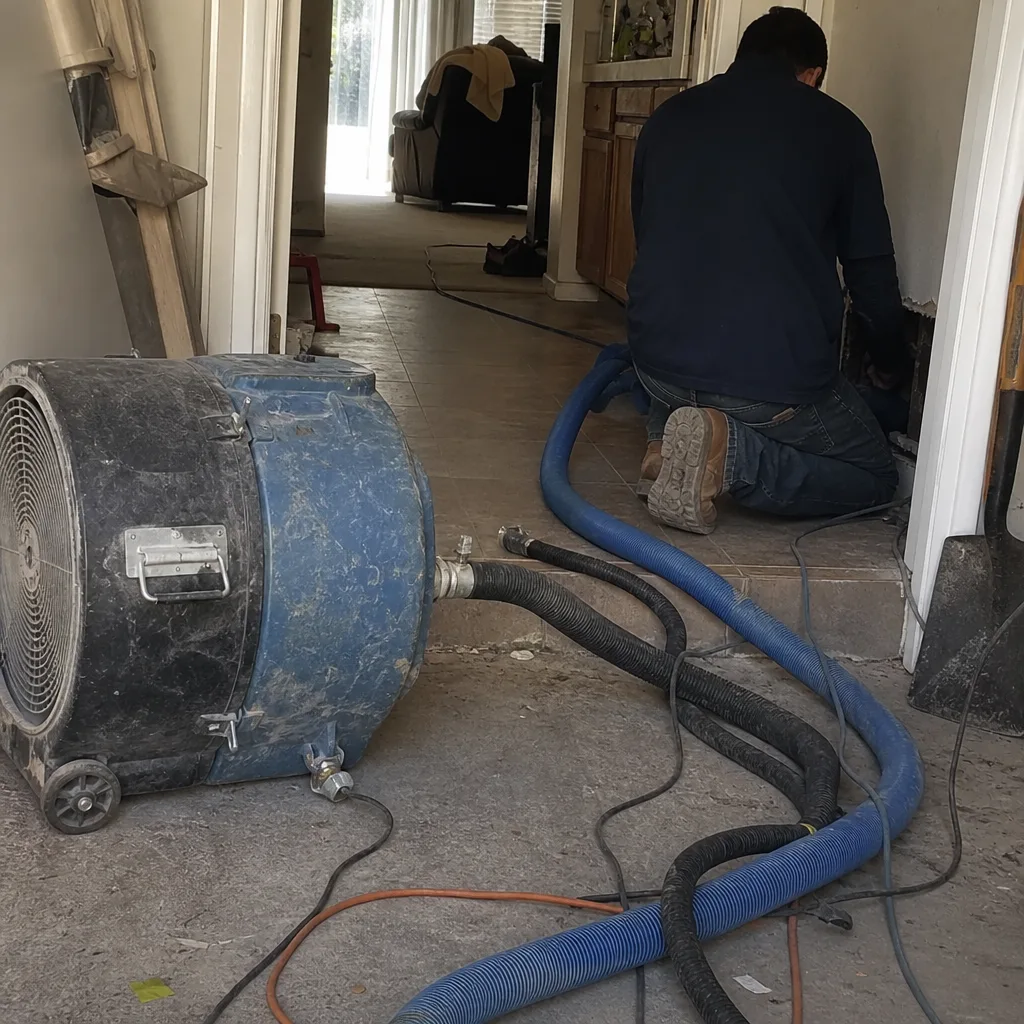 Before
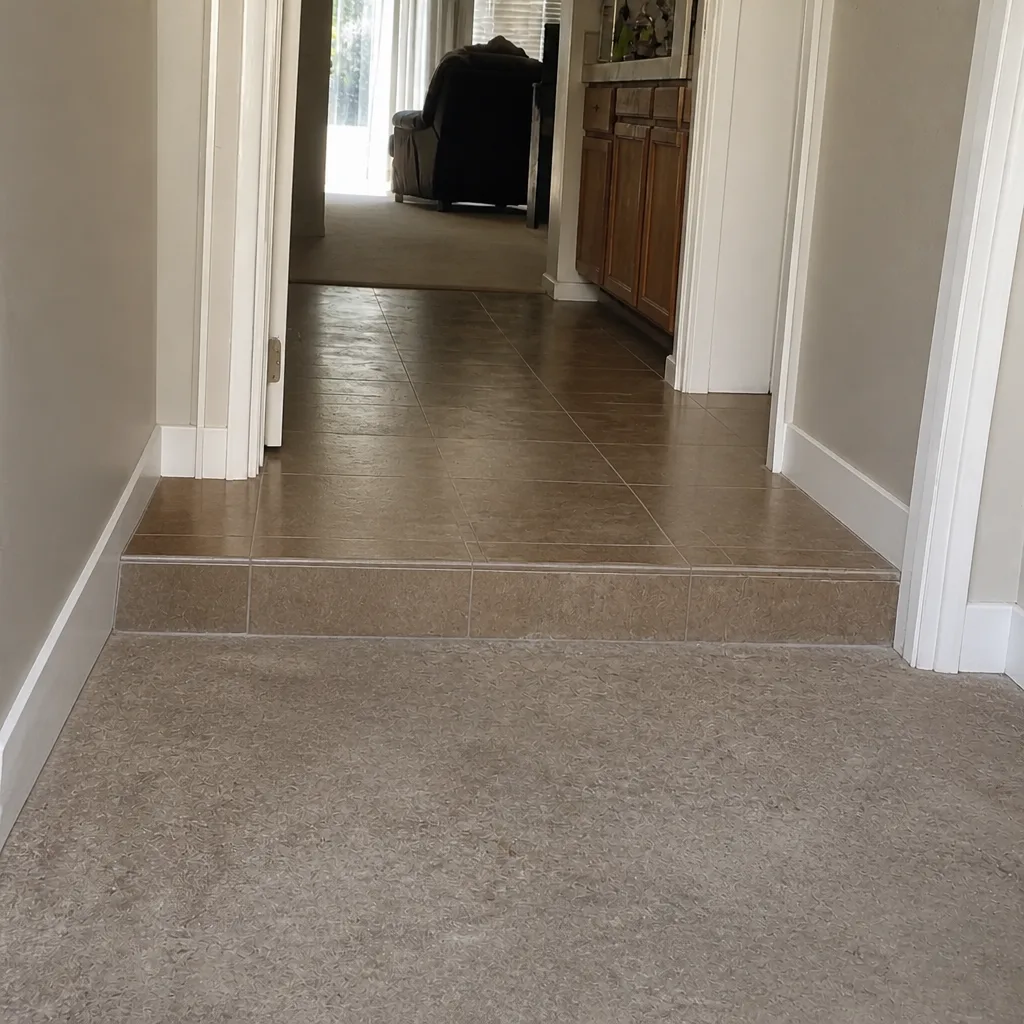 After
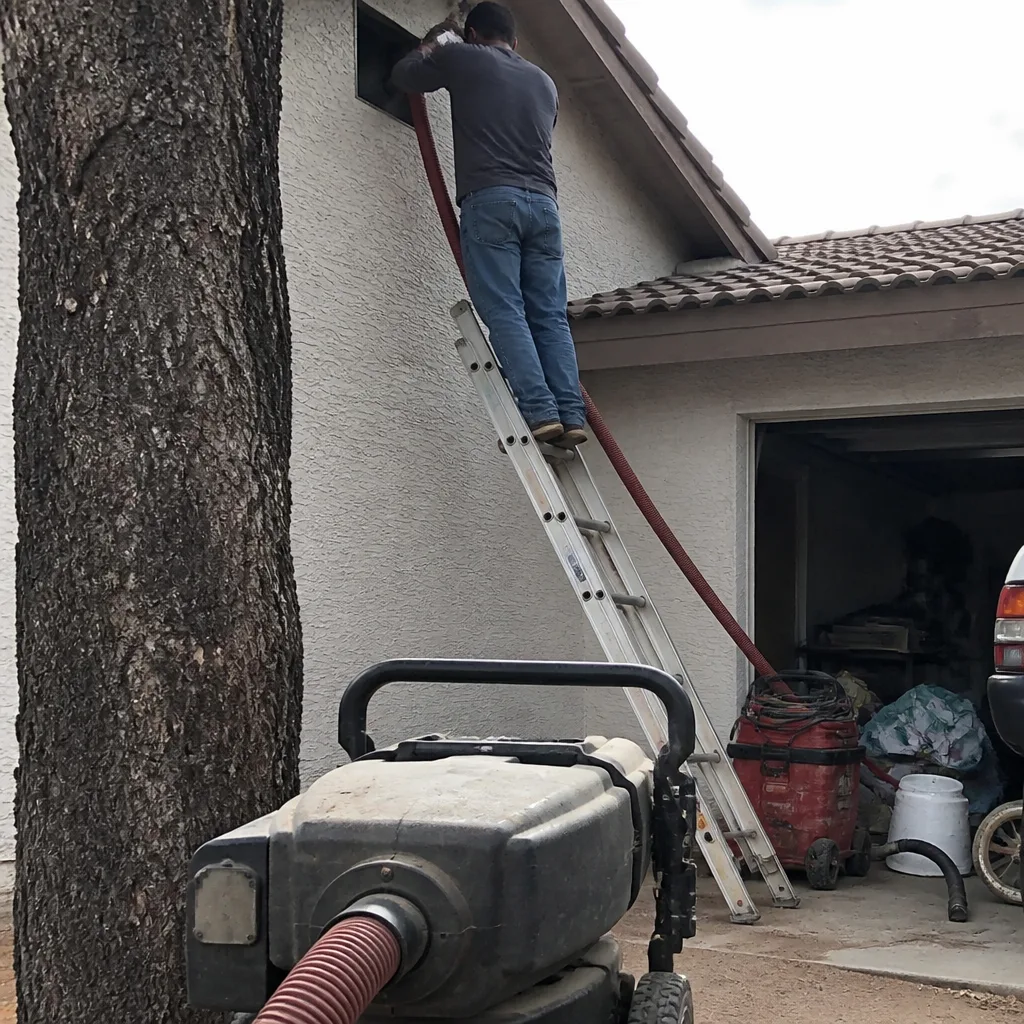 Before
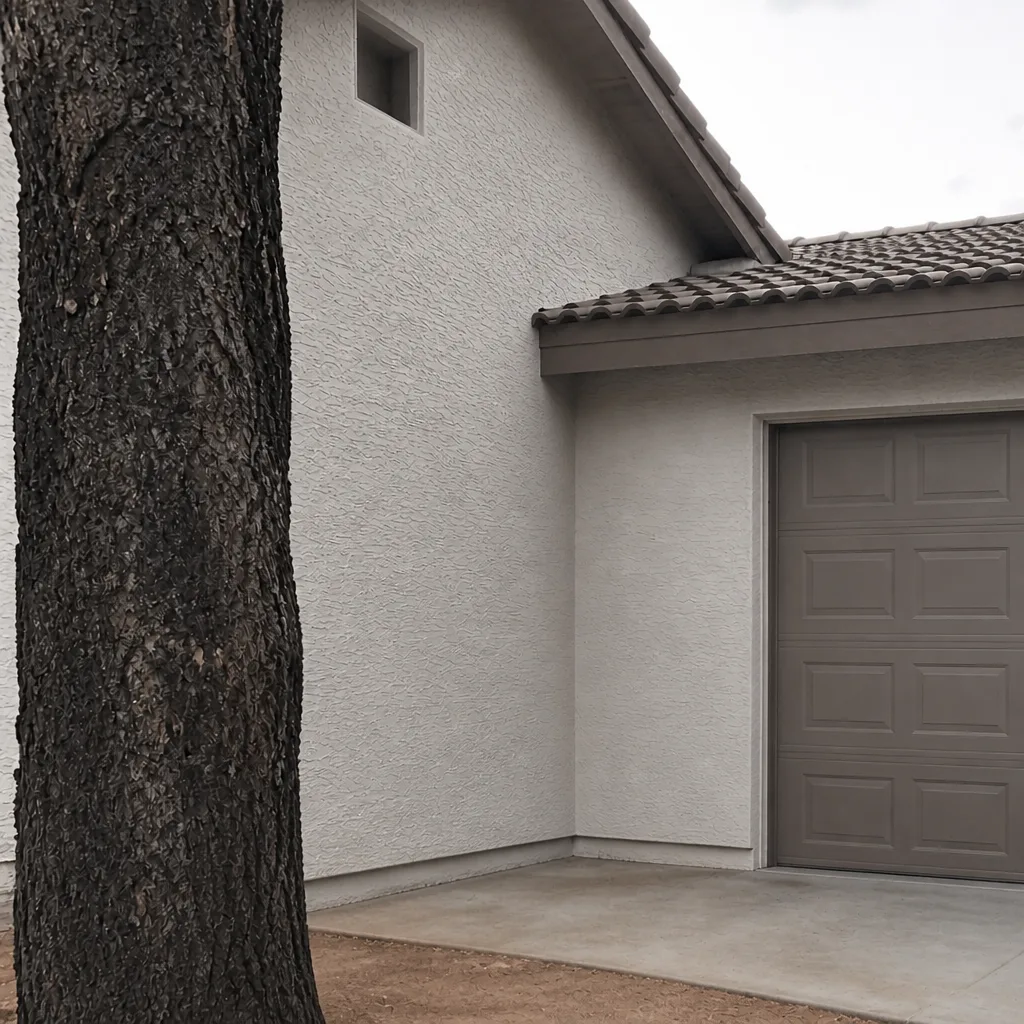 After
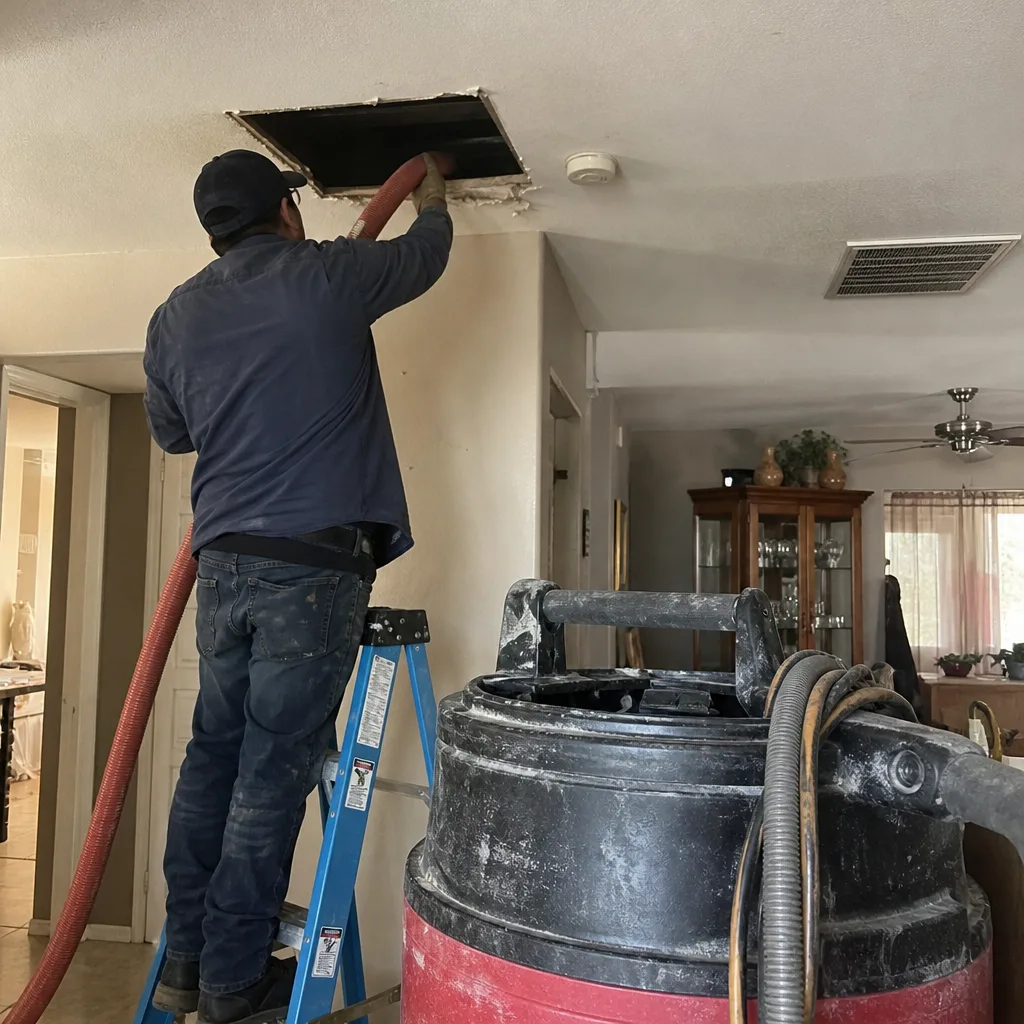 Before
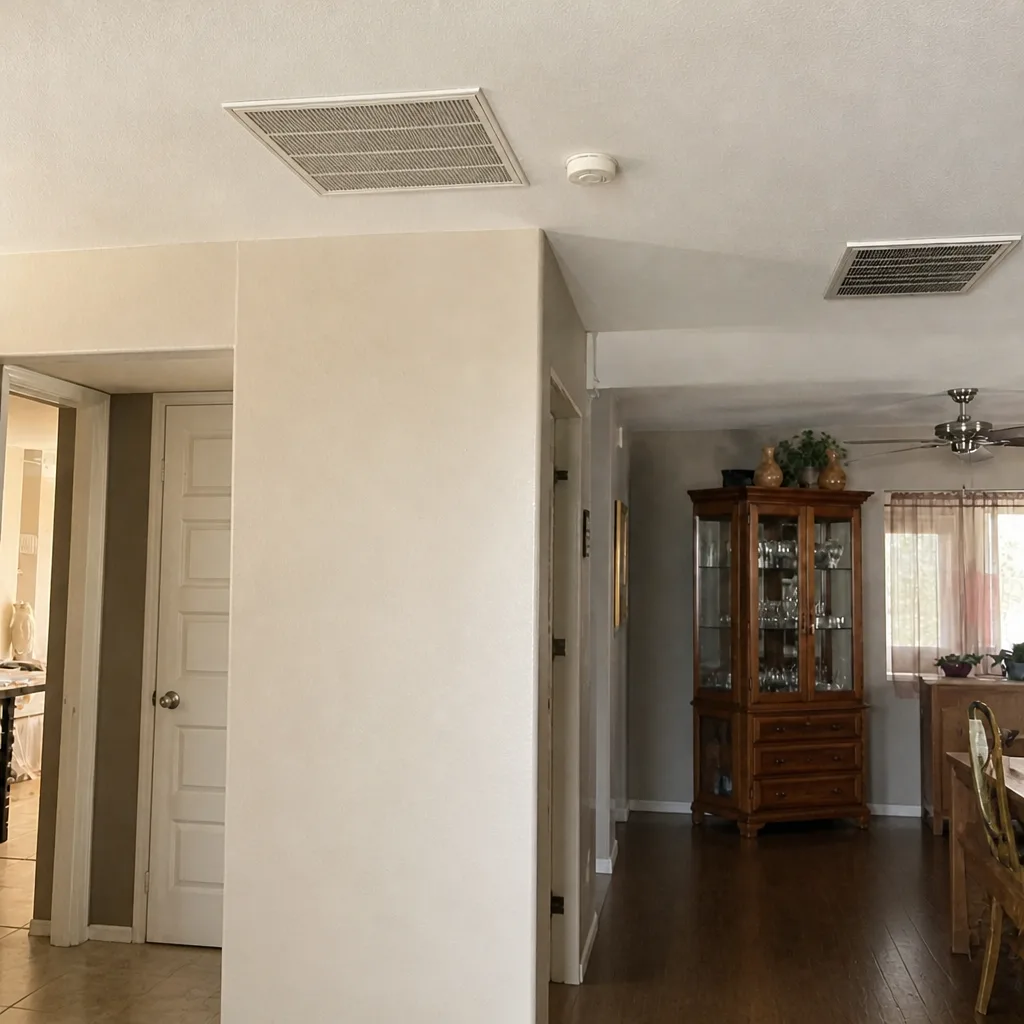 After
When to Call a Professional
Call us when the signs on this page line up with what you’re seeing and you want a clear answer rather than a guess. That includes visible dust at registers that returns quickly after cleaning, odors that show up at system start, uneven airflow between rooms, a post-storm smell that won’t go away, or a resale home that’s never had the ducts serviced. If your dryer vent hasn’t been cleaned in years, that’s a call regardless. Duct Cleaning Avondale offers free estimates in Avondale; when you call, you’ll get a whole-system quote before any work starts, and a technician trained specifically on duct systems, not a generalist handling it as an add-on. Call (866) 361-9304. We answer 24/7. Fast dispatch from 7am to 7pm, Sunday through Friday.
Frequently Asked Questions
The most reliable signs are visible dust blowing from registers, dust settling quickly on surfaces after cleaning, musty odor at system start, and uneven airflow between rooms. In Avondale, the return side is where buildup usually concentrates, so a smell that appears when the AC comes on and fades after a minute is one of the clearest indicators. Call (866) 361-9304 for an exact quote; estimates are free.
Pricing depends on the size of the system, the number of runs, and whether repair is included, so we quote per job from a written estimate after inspection. That’s the honest answer: anyone advertising a flat teaser number before seeing your ducts is quoting a price they’ll revise once they’re on site. One flat price per system, agreed before work starts, with before-and-after photos of your ducts, is the standard we hold ourselves to. Call (866) 361-9304 for an exact quote; estimates are free.
Cheap quotes usually reflect a smaller scope: surface cleaning of the accessible sections, no inspection inside the runs, and no repair work if a leak is found. The low price becomes a much larger invoice once the technician is on site and starts adding items. Ask what the quote includes, ask whether repair is included, and ask whether the price is flat per system. Call (866) 361-9304 to compare against a fair whole-system estimate.
Ask for before-and-after photos of the interior of your ducts, not just the registers. Photos taken inside the runs during the visit are the only real evidence that the system was cleaned, and any reputable contractor should be willing to provide them. We take and share them on every job. Call (866) 361-9304 if you’d like to see what the photos look like.
Most homes in Avondale do fine on a multi-year cycle, but the timing shifts with specific events: a renovation, a move into a resale home, or a monsoon infiltration. Those are the moments to schedule an inspection rather than following a calendar. There’s no universal annual requirement, and any company that insists on one is selling a subscription rather than a service. Call (866) 361-9304 for an inspection and a straight answer.
We fix it in the same visit. Air duct repair is a standalone service we offer, so when a technician finds a gap, a disconnected run, or a crushed duct during cleaning, we seal it and clean the system afterward rather than leaving you to book a second contractor. That single-visit repair capability is a big part of why we specialize in duct work rather than offering it as one line among many. Call (866) 361-9304 to schedule.
The Bottom Line
Warning signs on their own aren’t much use. What matters is what each sign tells you about the condition of your ducts, because the fix for a dirty system and the fix for a leaking one are different jobs. Dust at every register points to buildup. Dust at one register points to a leak. A smell that’s been there for months is growth. A smell that appeared after a monsoon is an infiltration that needs inspection before cleaning. In a resale home, treat the ducts as unknown and have them inspected. After a renovation, don’t wait for the calendar to come around. And check the dryer vent on its own schedule, because that’s a safety issue rather than a comfort one. If your ducts are showing any of these patterns, get a whole-system quote before committing to work. Call (866) 361-9304. We answer 24/7. Fast dispatch from 7am to 7pm, Sunday through Friday.
Written by the team at Duct Cleaning Avondale.